The Last Kingdom Is Coming
Matthew Maher
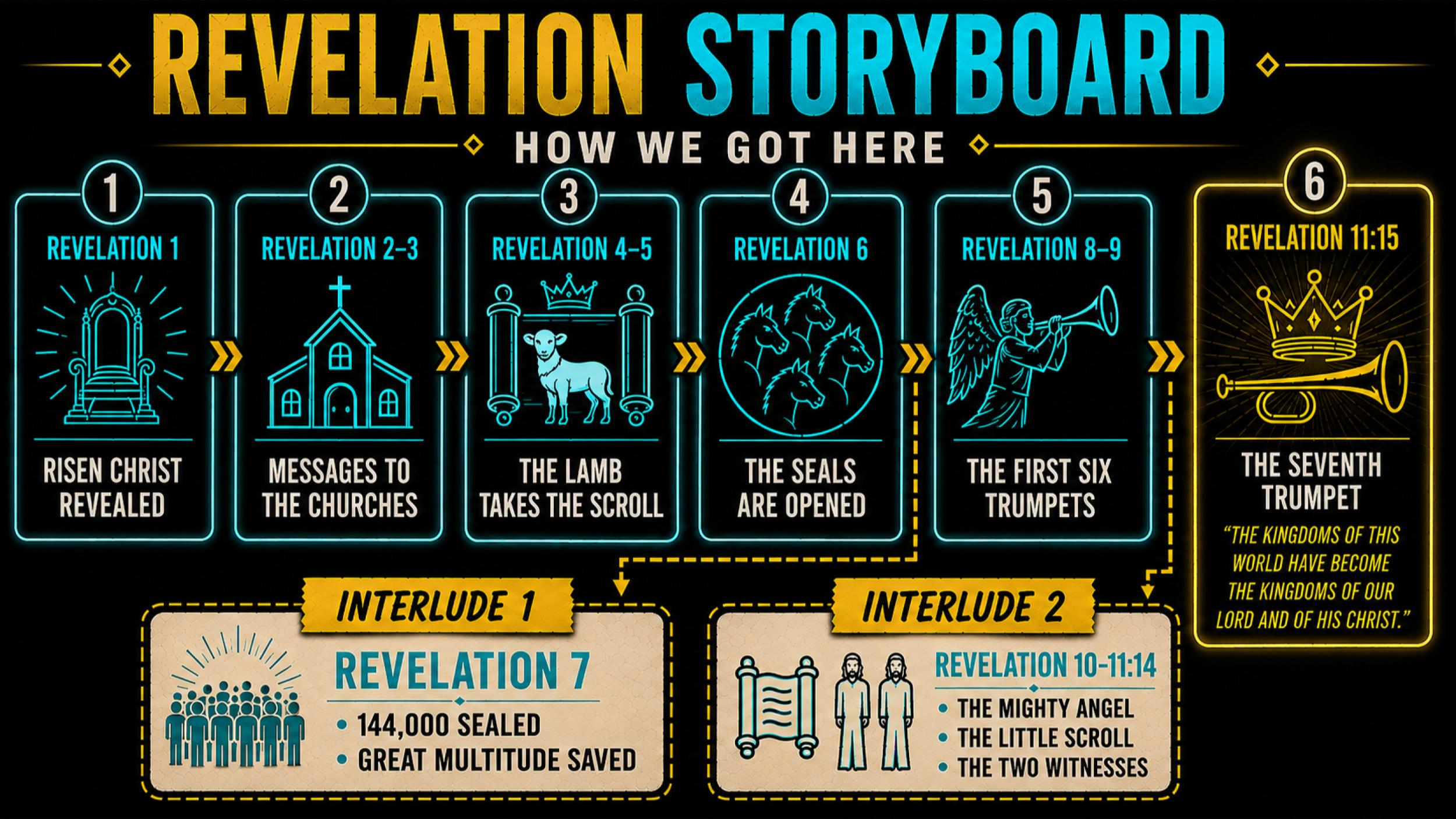
Then the seventh angel sounded: And there were loud voices in heaven, saying, "The kingdoms of this world have become the kingdoms of our Lord and of His Christ, and He shall reign forever and ever!" — Revelation 11:15
• The world is about to become the Lord's—not only with Him ruling over it but reigning within it.
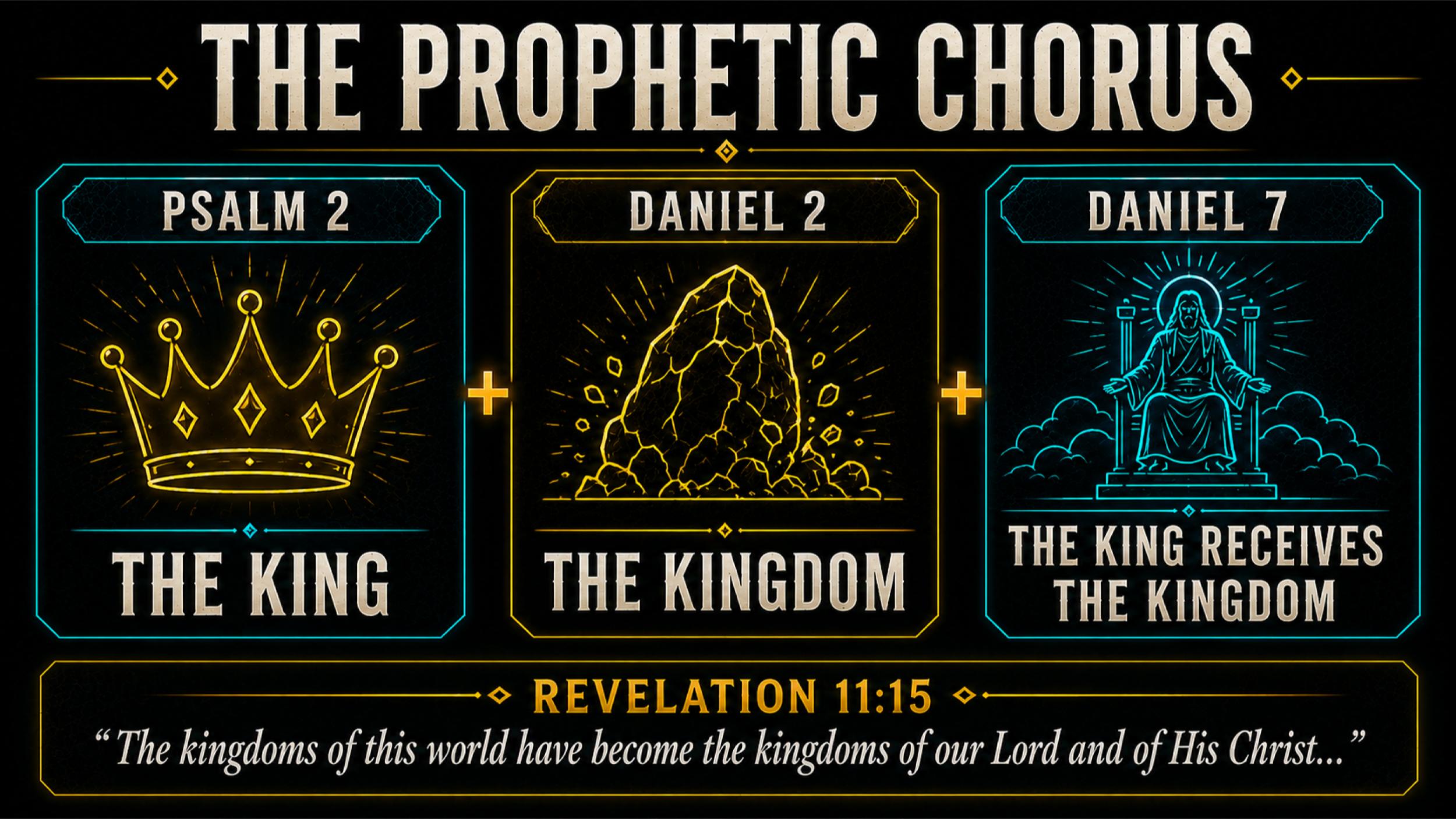
And the twenty-four elders who sat before God on their thrones fell on their faces and worshiped God, saying: "We give You thanks, O Lord God Almighty, The One who is and who was and who is to come, Because You have taken Your great power and reigned. — Revelation 11:16-17
The nations were angry, and Your wrath has come, and the time of the dead, that they should be judged, and that You should reward Your servants the prophets and the saints, And those who fear Your name, small and great, And should destroy those who destroy the earth. — Revelation 11:18
• It's not just about one nation under God; it's about One God over the nations.
• Fallen man doesn't merely reject God's order; eventually he attempts to redefine it.
Then the temple of God was opened in heaven, and the ark of His covenant was seen in His temple. And there were lightnings, noises, thunderings, an earthquake, and great hail. — Revelation 11:19
Additional Scriptures Referenced: Revelation 6:10; Matthew 6:9-13; Psalm 2:7; Daniel 2:44; Daniel 7:14; Luke 17:20-21; Matthew 12:28; John 18:36-37; Revelation 4:10; Revelation 5:8, 14; Revelation 7:11; Revelation 19:4; Psalm 2; Exodus 25:16; Exodus 16:32-34; Numbers 17:8-10; Hebrews 9:4
Discussion Questions
1. Read Revelation 11:15. Why can heaven celebrate Christ's future reign as though it has already happened? What does this teach us about the certainty of God's promises?
2. Read Psalm 2:7–9, Daniel 2:44, and Daniel 7:14. What does each passage contribute to our understanding of Revelation 11:15? How do the King, the Kingdom, and the King receiving the Kingdom converge here?
3. Revelation 11:16–17 shows the twenty-four elders responding with worship: praise, person, permanence, and power. What do their words reveal about God? How should what we know about God shape the way we worship Him?
4. Revelation 11:18 says, "The nations were angry, and Your wrath has come." Compare this with Psalm 2:1–3. Why does humanity resist God's authority, and where does Scripture say that rebellion ultimately leads?
5. What is the difference between thinking primarily in terms of "one nation under God" and recognizing "One God over the nations"? How should Christ's ultimate authority affect the way Christians view earthly nations and governments?
6. Verse 18 places wrath, judgment, reward, and destruction side by side. What does this teach us about the different outcomes awaiting those who belong to God and those who persist in rebellion against Him?
7. Revelation 11 begins with a temple on earth and ends with God's temple opened in heaven. What does the appearance of the ark of His covenant communicate about God's presence, promises, and faithfulness?