The War In Heaven
Matthew Maher
• The enemy tried to overrule prophecy, but God proved He rules over history.
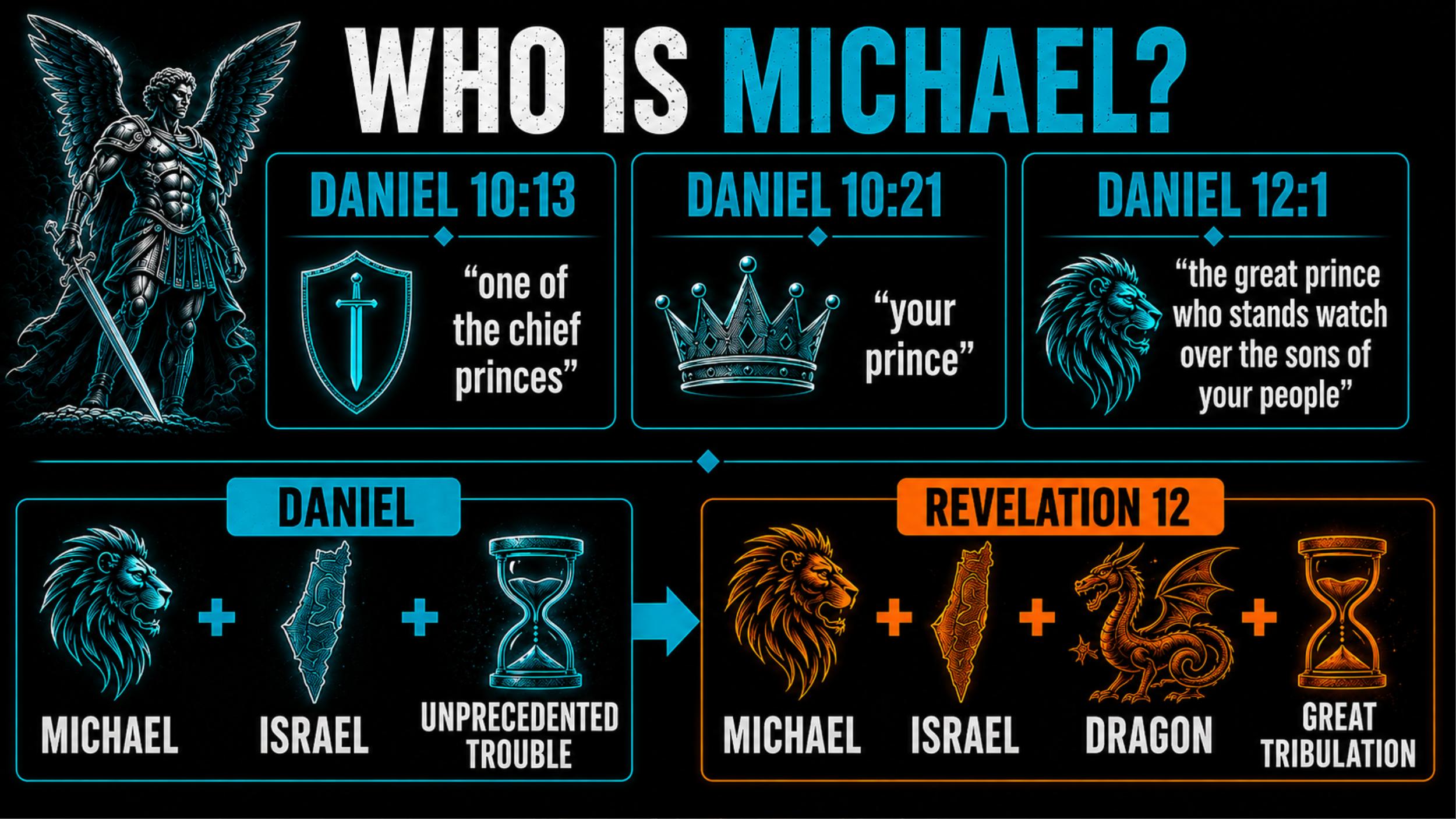
And war broke out in heaven: Michael and his angels fought with the dragon; and the dragon and his angels fought, but they did not prevail, nor was a place found for them in heaven any longer. — Revelation 12:7-8
So the great dragon was cast out, that serpent of old, called the Devil and Satan, who deceives the whole world; he was cast to the earth, and his angels were cast out with him. — Revelation 12:9
• The serpent of Genesis is the Dragon of Revelation.
• Dragon — destroyer. Serpent — deceiver. Devil — slanderer. Satan — opposer.
• Satan's greatest weapon is not necessarily possession or persecution, it's perversion.
• Satan presents the lie as light.
Then I heard a loud voice saying in heaven, "Now salvation, and strength, and the kingdom of our God, and the power of His Christ have come, for the accuser of our brethren, who accused them before our God day and night, has been cast down. — Revelation 12:10
• Conviction is guilt that gives way to grace. Condemnation is guilt that gives way to shame.
And they overcame him by the blood of the Lamb and by the word of their testimony, and they did not love their lives to the death. — Revelation 12:11
• The Accuser brings your record. The Advocate brings His record.
• If you're not willing to die for Christ, then you're not fully living for Christ.
Therefore rejoice, O heavens, and you who dwell in them! Woe to the inhabitants of the earth and the sea! For the devil has come down to you, having great wrath, because he knows that he has a short time. — Revelation 12:12
Additional Scriptures Referenced: Daniel 10:13; Daniel 10:21; Daniel 12:1; Matthew 24:15; Jude 9; Genesis 3:1; John 8:44; 2 Corinthians 11:14; Job 1–2; Zechariah 3; Romans 8:33-34; Colossians 2:14-15; Hebrews 2:14; 1 John 2:1
Discussion Questions
1. Scripture identifies Satan as the Dragon, Serpent, Devil, and Satan—devourer, deceiver, slanderer, and opposer. Which of these strategies do you think is easiest for Christians to overlook today? Why?
2. Job 1–2, Zechariah 3, and Revelation 12:10 portray Satan as an accuser. How should knowing that Satan accuses believers affect the way we respond to guilt, shame, and condemnation?
3. Read Romans 8:33–34 alongside Revelation 12:10–11. What is the difference between Satan pointing to our record and Christ pointing to His blood? Why is our confidence found in Christ's work rather than our own defense?
4. Revelation 12:11 says believers overcome "by the blood of the Lamb and by the word of their testimony." What does it practically look like to bear faithful, public allegiance to Jesus in a culture increasingly opposed to biblical truth?
5. "They did not love their lives to the death." What might we be tempted to protect—comfort, reputation, relationships, opportunities—that could make us reluctant to stand faithfully for Christ?
6. The cross settled Satan's fate, even though his final judgment has not yet been carried out. How does knowing the outcome of the war change the way Christians should face spiritual opposition right now?
7. Revelation 12:12 says Satan's wrath increases because "he knows that he has a short time." Why should increasing spiritual opposition produce confidence rather than fear in the believer?
8. If "the war is real, but the outcome is not in question," what would you approach differently this week if you truly lived like Christ has already won?